.png)
.png)
Northern cod quota to rise 55 per cent in 2026 as stock reaches healthy zone
- Kyle Sooley-Brookings

- 2 hours ago
- 2 min read
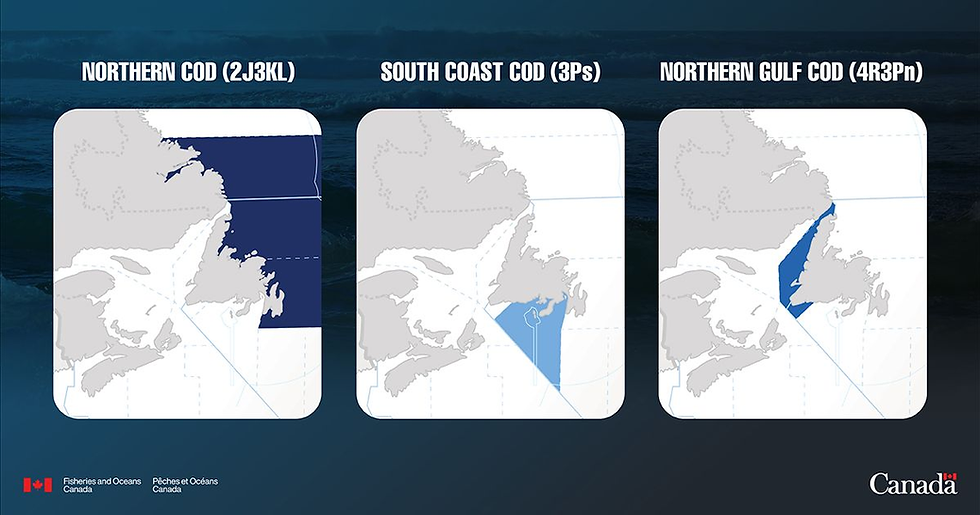
The federal government is increasing the northern cod quota by 55 per cent this year after new science assessments found the stock has reached the healthy zone for the first time since the 1992 moratorium.
Fisheries and Oceans Canada announced Friday that the total allowable catch for northern cod in fishing area 2J3KL will increase from 38,000 tonnes in 2025 to 59,000 tonnes in 2026.
Federal Fisheries Minister Joanne Thompson said the decision will support a stronger commercial fishery while ensuring the stock remains on a sustainable path.
"Fishing is more than an industry in Newfoundland and Labrador — it is a way of life," Thompson said in a statement. "For generations, northern cod has been central to our story."
The department said the increased harvest follows years of science-based management and reflects a total harvest rate of 12 per cent. Officials say the stock's improved health allows for a larger commercial fishery alongside the previously announced expansion of the recreational food fishery.
The new quota allocations will provide larger shares across all sectors.
The inshore fleet will receive 70 per cent of the total allowable catch, or 41,300 tonnes, up from 30,400 tonnes last year.
The offshore and midshore fleet allocation will increase to 11,806 tonnes, representing 20 per cent of the quota, compared with 3,800 tonnes in 2025.
Indigenous groups and special allocations will receive 5,895 tonnes, or 10 per cent of the total quota, up from 3,801 tonnes last year.
The department also announced that the capelin quota for 2J3KLPs will remain unchanged at 14,533 tonnes.
Meanwhile, the northern Gulf cod stock in area 3Pn4RS remains in the critical zone and will continue to face strict harvest limits.
No directed commercial fishery for northern Gulf cod will be permitted between the 2026-27 and 2028-29 fishing seasons. Total removals from all sources, including the recreational food fishery, Indigenous food, social and ceremonial fisheries, and commercial bycatch, will remain capped at 500 tonnes annually.
The department said the stock remains well below the level required to support a sustainable commercial fishery and will continue to be closely monitored as rebuilding efforts continue.
Federal officials say the management decisions are designed to balance conservation objectives with economic opportunities for harvesters, processors and coastal communities across Newfoundland and Labrador.


Comments